
Born in Campania but grown in the most competitive markets, Innovaway it is completing a transformation: from pure operational support to the end-to-end design and management of platforms and services. At the core is a service culture that now also guides the adoption of Agentic AI, a strong focus on software quality and resilience, and a delivery model distributed between Italy and Albania with growth ambitions supported by major clients and Consip agreements.
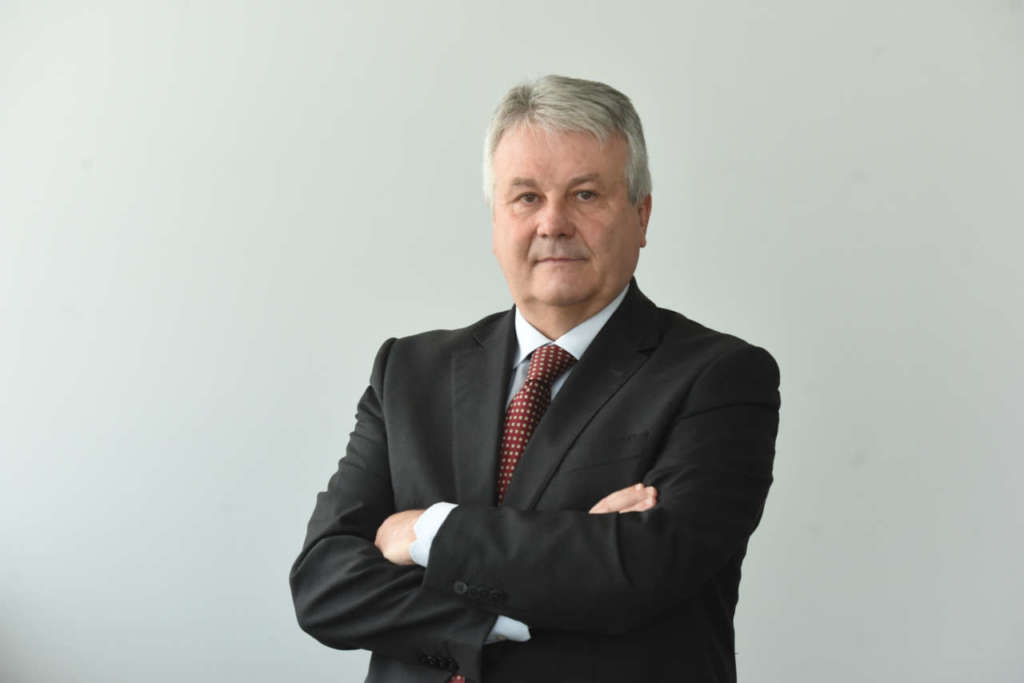
The positioning is clarified without mincing words. "We are a service provider that also deals with system integration – summarizes Antonio Burinato, General Manager of the company – . With a precise mission: our solutions must work in the customers' operations.". It is the service culture—what happens "after the project"—that guides architectural choices, processes, and metrics, shifting the focus from the classic "break & fix" to a "predict & prevent" paradigm built on prevention, automation, business continuity, and accountability for the result.
This approach is also reflected in the geographical distribution of the activity. "We were born in Campania, where we still have a significant portion of our personnel, but we operate nationwide and our main customers are located in other areas of Italy – explains Burinato-. It is a sign of the ability to compete in different markets and to build solid relationships with companies and public administrations in highly complex contexts."
Innovaway operates in multiple sectors, both public and private, with services ranging from application development to the management of complex services, from operations support up to software quality. Among the areas cited by the company management, some particularly representative areas stand out.
One of these is the banking sector, where Innovaway handles continuous operational support activities, management of physical and digital channels, and technological services for major financial groups. In the case of Intesa Sanpaolo, the company oversees branches, digital channels, and group companies, with a growing role in Application Quality Assurance. "In some areas, we are the sole supplier", observes Antonio Burinato once again, stressing that software quality is now a determining requirement, given that the bank-client relationship increasingly relies on digital platforms.
Another significant area is retail, particularly fashion, where Innovaway manages services that accompany the digital evolution of points of sale or stores. "In the modern store, everything is digital: payment systems, mobile POS, inventories, readers", explains Burinato. The company operates with a model that combines teams present at the clients' sites with structures organized for the centralized management of services.
Of particular importance is the presence in public administration and healthcare. With INPS, Innovaway handles application development activities, particularly in the income area and on highly critical software components. Even more strategic is the contribution to telemedicine, where the company participates—in partnership with Engineering—in the national project coordinated by Agenas, dedicated to creating the central governance layer for telemedicine services. This infrastructure allows for the centralized monitoring of the actual delivery of services across the territory, from the volume of visits to the operational impact on healthcare facilities.
The evolution of the offering is increasingly leading Innovaway to integrate Artificial Intelligence tools within its managed services and application processes. The focus is not on adopting AI as a "technological novelty," but on continuity with its DNA: designing and governing solutions that genuinely work in operations, improving quality, response times, and the ability to prevent incidents.

It is from this perspective that Innovaway has oriented its path on AI. "We will not develop our own LLM, but we integrate AI where it amplifies services", explains Sergio Ajani, Service & Solutions Design Director, stressing that the goal is not to replace expertise, but rather to increase the capacity of the teams to intervene on complex systems.
The technical choices follow the same logic:
– orchestration of agents capable of executing multi-step tasks within IT operations and business processes;
– controlled models, preferably locally or in environments subjected to strong governance, in order to maintain control over security, data quality, and system behavior.
This approach directly links to the theme of resilience and software quality, two pillars on which the company has insisted for years. AI is therefore adopted as an extension of service capabilities—by automating repetitive tasks, supporting preventive analysis, and helping to govern complex environments—and not as an isolated or substitute technology.
Ajani warns on the issue of quality in assisted development: "Today, almost all teams are experimenting with copilot. The risk of uncritical adoption is high: how do I guarantee that a generated process is deterministic when necessary? In real-time or mission-critical systems, testing becomes even more central.". Here, practices and certifications matter: "Our testing colleagues are ISTQB certified; we are experimenting with tools for requirements analysis and assisted refactoring, which are essential when modernizing legacy applications that lack documentation."
The convergence between cyber security and business continuity is addressed from the perspective of operational resilience. The goal is to prevent interruption, not just to "respond to the alarm." Hence the focus on endpoint hardening, patching and vulnerability management from a risk perspective, static and dynamic testing on applications (mobile and web), isolated recovery environments and—above all—backup protection as the "last defense" to guarantee clean restores. The guiding principle is singular: to measure and govern operational continuity with audit trails, ex-post controls, and SLAs consistent with business risk.
On the technological front, Innovaway favors the adoption of unified governance platforms, understood as a "central nervous system" capable of ensuring cross-visibility over assets, compliance, patching, risk, and service performance. Operational automation, agentic AI models, and tools supporting prevention converge on this layer.
In this light, the collaboration with HCLSoftware represents a strategic axis: from the orchestration of AI agents to Enterprise Service Management, up to endpoint management and application security components. The integrated adoption of these solutions allows for the introduction of self-correction mechanisms, predictive analysis, and continuous improvement into managed services.
Alongside this pillar, Innovaway employs targeted technologies for specific needs. Rubrik, for example, has been adopted for backup protection and data resilience in critical contexts, such as the regional healthcare environment. The logic of immutable backups and non-compromisable repositories represents an essential component of the "predict & prevent" strategy, preventing compromises during the restore phase and ensuring continuity even in attack scenarios.
The choice of partnerships remains pragmatic and not ideological. Innovaway uses OpenText for network & systems management perimeter and for the entire testing area, and relies on vertical vendors for specialized areas such as model-based testing or assisted refactoring. The same approach applies to the cloud: a principle of "guided agnosticism" that starts from the stack actually adopted by clients and introduces only those elements that increase value, control, and cost sustainability. "We don't launch crusades for or against a cloud: we start from the client's current state and intervene where we can improve governance and continuity.", emphasizes Burinato.
Multi-provider and hybrid are the norm. The difference lies in the "how": standardization of deployment patterns, automation of the asset lifecycle, FinOps and cost governance to eliminate oversized licenses and ghost consumption, with shared metrics between IT and the CFO.
Innovaway has about 800 professionals: slightly less than half in Naples (with an extension in Benevento), the others distributed between Milan, Rome, and Turin, plus a competency center in Tirana that has been active for ten years on the software factory and managed services. "We do not run call centers: we manage complex services with a front-end close to customers and centralized governance," emphasizes Burinato. The hybrid delivery model—proximity + distribution—allows us to hold together relationships, efficiency, and continuity.
Innovaway closed 2024 with growth slightly below 10% over the previous year; for 2025, the company projects revenue close to 60 million euros. "Contractual credibility" is a central lever for its development model: "With Intesa Sanpaolo, we have a five-year contract with a significant guaranteed minimum: when you present yourself with these numbers, the perception of reliability changes"", observes Burinato. On the public front, the presence in Temporary Groupings of Companies (RTI) for multiple Consip agreements (digital healthcare with Engineering; system management, maintenance and management services with TIM and Fastweb; digital devices for universities and research institutes with CRUI) opens up multi-year development opportunities. "We want to grow, but with a clear identity. Aggregations only make sense if they strengthen our DNA and our offering; otherwise, they are just collections of stickers," he concludes.